

Assessment, Recording & Reporting – The Link
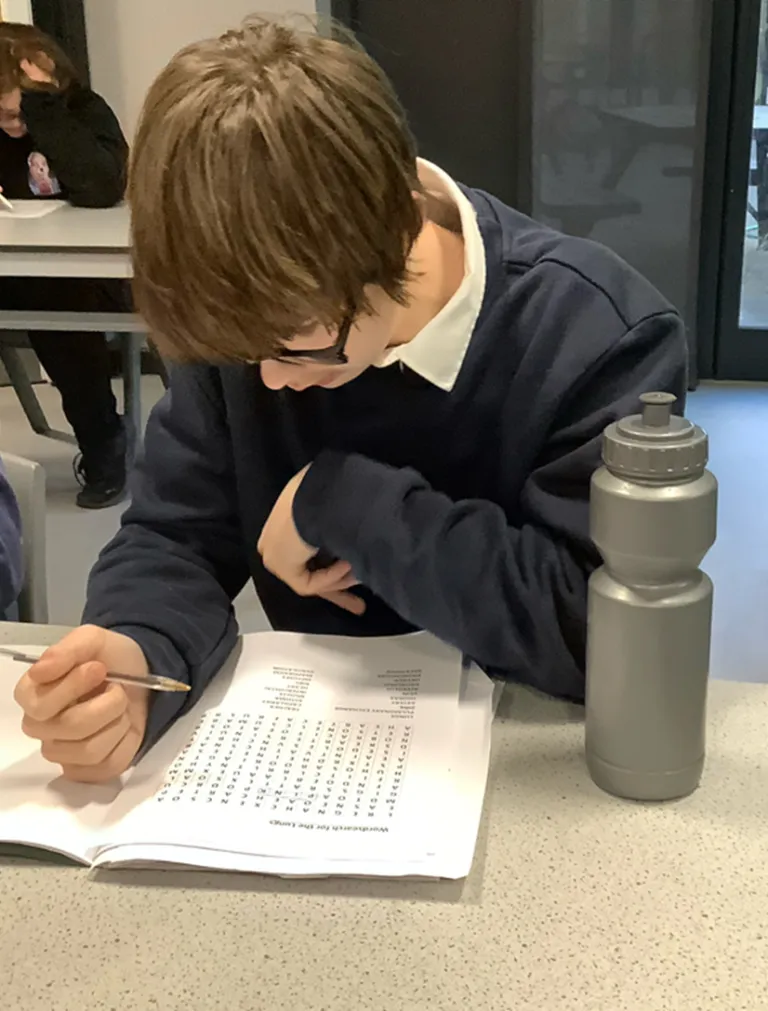
Pupils will arrive at The Link at different times throughout the school year and at any point during their school life. It is therefore important to be accurate about the assessment information we receive. Prior to entry pupils will have been met by at least one member of the SLT. This will have been carried out, if possible, at their current school or education provision. This will ensure that staff have a clarity of understanding about the needs of pupils and that important information is accurately recorded and effectively shared with the staff team.
During their first term, pupils will participate in a range of assessments in order to develop a holistic baseline. These assessments will, of course, be completed in a coproduced manner to ensure that parents and families, as well as the pupil, have knowledge of what is being recorded about them and what this means. The assessment information gathered will then be used to support improvements to EHCP writing and curriculum planning for the individual needs of the pupil. At The Link we will set challenging targets from our accurate knowledge of starting points.
Our cohort of learners are all individuals and as such their strengths and needs vary widely. Whilst assessment is a powerful tool in understanding our learners better it must be flexible to record their individual strengths and needs.
At The Link we believe that assessment should be the opportunity for the learner to share the narrative of their progress, success, challenges and potential.
Through the pupil centred reviews we will ensure that all people around each learner understand where they are, how they are doing and where they want to be. The Purpose of Assessment at The Link is to inform planning and enables us to be aspirational for all pupils. It keeps us on task and on track without placing a ceiling on expectations. This progress is an integral part of our curriculum and supports us in celebrating the small, but huge, steps of progress. Our assessment is based upon pupils EHCP outcomes and our own baseline assessments, it builds on ‘preparing for adulthood’ expectations. We believe that assessment must capture attainment in a variety of contexts. Skills gained by the learner need to be recognised and to be generalised both in school and at home because learning occurs within a 24hr context.
The Link will provide through Evidence for Learning (EFL) a weekly communication and a termly report on EHCP outcomes.
Reporting
You will receive a report on your child’s progress each term. We send our reports through InTouch with details explain what the numbers mean. Each report provides the following information, to show how your child is doing in each subject:
Attitude to Learning and Independent Learning:
At Swavesey we believe in developing our students so that they become resourceful, resilient and reflective to develop their independent learning skills. We also develop their understanding of how to be responsible, respectful and safe which is a reflection of their attitude to learning. Together these form the 5Rs of learning. Through these skills, students will have the capacity for greater success in reaching their potential as learners. Attitude and independent learning grades range from 1-4: scores close to 1 indicate a student who is well motivated, attentive, contributes in class, and completes homework to the best of his /her ability and to deadlines. Scores of 4 are of concern and trigger communication between home and school to address any underlying problems.
Current Indicator Grade (CI): This indicates a student’s potential. The word ‘Current’ is significant in that it is not limiting or focused or a pre- determined destiny, it can change if a student makes more rapid progress or shows higher levels of effort, evidenced clearly through their other grades. CI grades range from W, working towards national expectations, I in line with national expectations, A above national expectations and E, exceeding national expectations. Targets are based on how well children have achieved in the past, on reliable national data and on our teachers’ professional judgement of your child’s potential.
P Grade: This is a method of informing students regularly about their work and how they can improve it further. The P Grade on a report shows whether a student is making progress in each subject. P+ means he/she is making better than expected progress. P- means less than expected progress.